
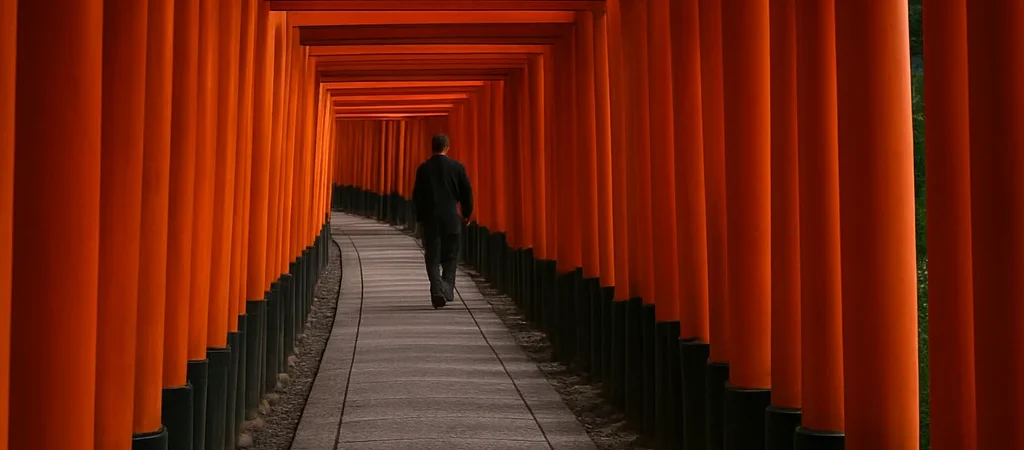
At Kyoto’s most photographed spots, the scene changes with the hour: a path that feels spacious early can become a steady stream of visitors later on. Rather than racing to cover every famous address, choose one area for the morning and let the rest of the day breathe. It makes for a better visit—and a more honest set of photographs.
Choose one early stop
Fushimi Inari Taisha’s torii gates and Arashiyama’s bamboo paths are both recognizable for a reason, but neither needs to be paired with a long list of nearby stops. Arriving earlier can give you more space to walk and observe, though it does not guarantee solitude. Check the current access details for the places on your route, then build in time to pause rather than photograph only the first familiar view.
Keep the route realistic
Kyoto is spread across distinct neighborhoods, and crossing the city between every stop can eat into the day. Group nearby places together and check current transit routes before leaving; buses are useful, but popular routes can feel crowded. A short list with room for a meal or an unplanned side street usually works better than trying to fit the whole map into one visit.
Photograph with care
Temples, shrines, and neighborhood streets are lived and visited places, not just backdrops. Follow posted photography rules, avoid blocking paths, and ask before making someone the subject of a close portrait. In a family gallery, let each person bring back a different frame: architecture, food, small details, or a short clip that captures the sound and movement of a street.